
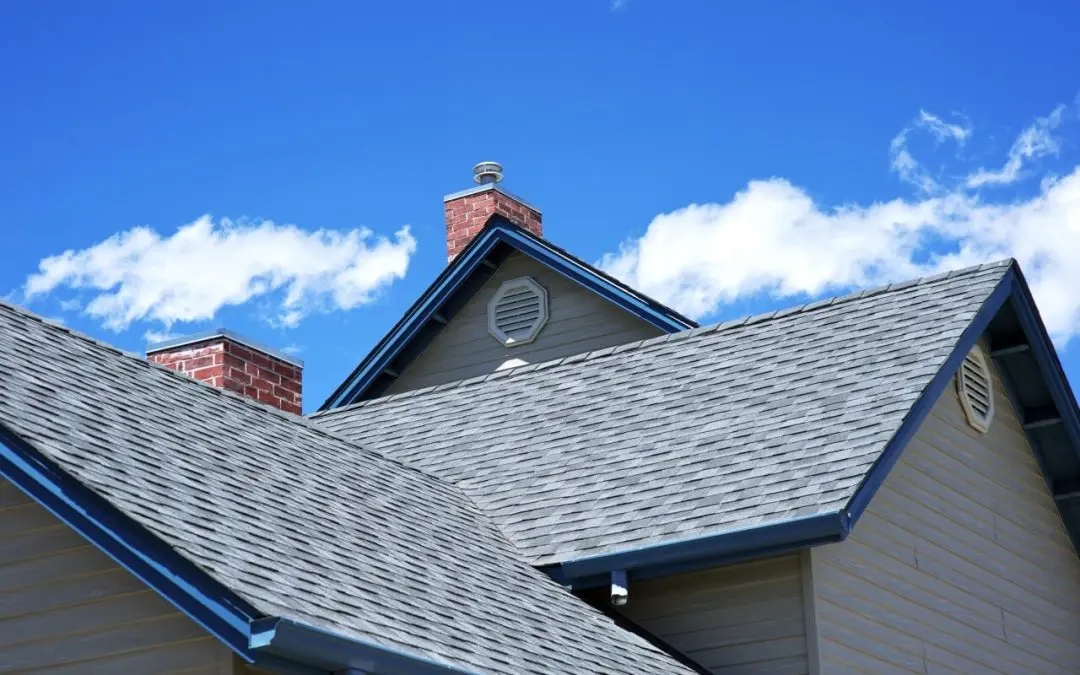
Maintaining your roof is one of the highest-return home maintenance habits available to any homeowner. A roof that gets regular attention lasts longer, performs better, and causes far fewer emergency repairs than one that’s ignored. Most homeowners don’t think about their roof until something goes wrong.
What to Look for When Inspecting Your Roof
Maintaining your roof starts with knowing what to look for, both from the ground with binoculars and through the attic. From the ground, the most visible indicators of roof condition are missing, lifted, or visibly damaged shingles; granule accumulation in the gutters or at the downspout base, indicating asphalt shingles are losing their protective coating; sagging in the roofline suggesting structural concerns in the decking or framing beneath; and flashing conditions at chimneys, skylights, and roof-to-wall intersections that appear separated, corroded, or missing sealant. From the attic, look for daylight visible through the decking, water staining or dark spots on rafters, and any moisture in the insulation. An attic inspection after a significant rain event is the most reliable way to identify active leak points that haven’t yet produced visible interior stains.
The Maintenance Tasks That Matter Most for Maintaining Your Roof
Gutter cleaning is the maintenance task most consistently connected to premature roof failure. Overflowing gutters back water up under roofing material at the eaves, saturating the decking and creating rot and mold conditions that compromise the roof’s structural base. Cleaning gutters at least twice yearly eliminates the overflow condition before it reaches the roof edge. Sealant and flashing maintenance is the other high-priority task for maintaining your roof against water intrusion. Flashing, the metal components that seal roof penetrations at chimneys, vents, skylights, and dormers, is the most common pathway for water entry in an otherwise intact roof. Sealant around these penetrations degrades with UV exposure and temperature cycling, and maintaining it on a regular inspection-and-seal schedule prevents the gaps that allow water to migrate under the roofing material. Any separation, cracking, or missing sealant at a flashing location is worth addressing immediately. Keeping the roof surface clear of debris prevents moisture retention that accelerates deterioration beneath.
When Professional Assessment Supports Maintaining Your Roof Long-Term
Even with consistent homeowner-level maintenance, maintaining your roof at a professional standard means having a licensed roofing contractor or professional inspector evaluate it periodically. A professional roof inspection identifies conditions a homeowner walkthrough misses: granule loss patterns indicating uneven aging, flashing failures requiring close evaluation, decking conditions detectable only through physical testing, and the estimated remaining service life that informs when replacement planning should begin. Most roofing professionals recommend inspection every three to five years for roofs under ten years old and annually for those approaching or past the midpoint of their expected service life.
Frequently Asked Questions (FAQs)
How often should I be inspecting my roof?
A homeowner-level inspection from the ground and through the attic annually is the baseline for maintaining your roof between professional evaluations. A professional inspection every three to five years is appropriate for roofs in good condition under ten years old; annually for roofs approaching or past the halfway point of their expected service life. Any event that could have caused damage, hail, high winds, fallen branches, warrants an inspection promptly rather than waiting for the next scheduled one.
How long should a roof last with proper maintenance?
Asphalt shingles have a rated lifespan of 20 to 30 years depending on quality, with architectural shingles at the upper end. Metal roofing typically lasts 40 to 70 years. Tile and slate can last 50 years or more. Actual service life is affected by installation quality, climate, maintenance consistency, and ventilation. A well-maintained roof in a moderate climate regularly exceeds its rated lifespan, while a neglected one in a harsh climate often falls short.
What are the most common causes of premature roof failure?
Inadequate attic ventilation is the most consistently underestimated cause; heat and moisture buildup deteriorates roofing material from beneath, reducing service life regardless of how well the surface is maintained. Deferred flashing and sealant maintenance allows water entry that damages decking and framing. Gutter overflow saturates the eave area and creates rot conditions in the decking and fascia.
Can I walk on my roof to inspect it myself?
Walking the roof is possible for most homeowners on moderate-pitch surfaces in dry conditions, but it carries fall risk and could damage older asphalt shingles that have lost flexibility, and tile or slate that can crack under foot traffic. For most homeowners, a ground-level inspection with binoculars combined with an attic inspection covers the majority of what needs to be evaluated. When a surface-level inspection is necessary, a professional with appropriate safety equipment is the appropriate person to conduct it.
When does maintenance shift from upkeep to replacement planning?
When the roof is within five years of the end of its expected service life, when repairs are being made more frequently across multiple areas, when granule loss is extensive and uniform, or when a professional inspection identifies decking deterioration beneath the surface, these conditions indicate the roof has moved from a maintenance situation to replacement planning. Continuing to invest in repairs on a roof approaching end of life typically costs more over the remaining years than replacement itself, and the risk of unplanned failure with interior damage consequences increases as the surface continues to deteriorate.
Delta Home Inspection provides home inspections in Mobile and Baldwin Counties in Alabama. Contact us to schedule our services.